Social Structure
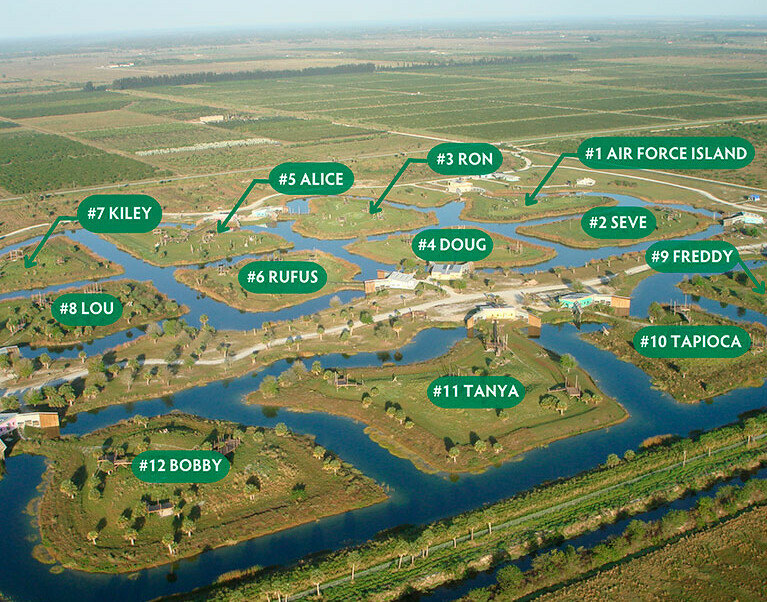
An enriched outdoor environment allows the chimps to roam, visit with friends, bask in the sun, or curl up in the shade. These freedoms provide them with the dignified and peaceful retirement they have always deserved.
The most important gift the chimpanzees have is each other.
In the wild, chimpanzee communities may range in size from 15 to 120 chimps of both sexes and all ages. In their former lives as research subjects, pets, and entertainers, many of the chimps lived alone. These chimpanzees are now getting a second chance at life. They live in large family groups of up to 26 members and are learning how to play, laugh, and groom – all natural behaviors for chimpanzees.
Nutrition
Chimps Love to Eat!
Chimpanzees are opportunistic feeders, meaning they consume fruit and vegetables that are ripe and available during different times of the year. Here at Save the Chimps, we are able to obtain nutritious food items year-round to provide three balanced meals per day. You always know when it’s time to eat around here, as meals are met with loud, happy vocalizations from the chimps!

Oranges contain many phytochemicals, such as narigenin, that boost the immune system, decrease inflammation, and work as anti-oxidants. The chimpanzees never waste the white stuff between the peel and the fruit, often referred to as “pith.”

Bananas are an excellent source of potassium, which is found in both the fruit and in the peel. We’ve noticed that chimpanzees who have an upset stomach will often eat the peel more than the fruit as it contains a flavonoid called leucocyanidin that helps protect the stomach from excess acid.

The chimpanzees love corn and we’re glad they do because it’s rich in potassium, antioxidants, and fiber. Like humans, as chimpanzees age their cells produce free radicals that cause damage to the surrounding cells.
Care
Chimpanzee Enrichment
Many of the chimpanzees in our care endured years of a barren and lonely existence. Save the Chimps is committed to providing the chimpanzees with the best retirement possible. In short, we want them to be happy and enjoy life. One way in which we ensure the chimpanzees well-being is through enrichment.
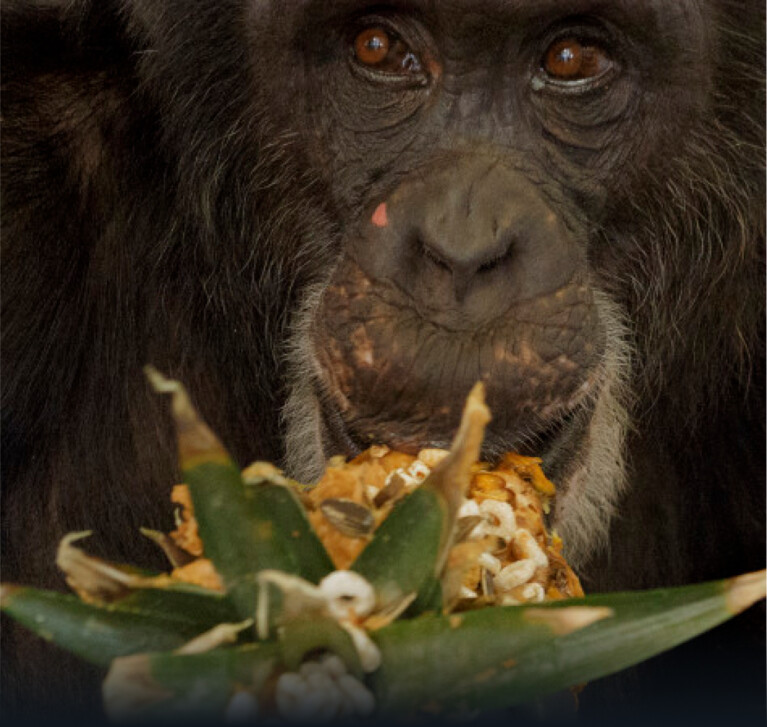
Why is Enrichment So Important?
In the wild, chimpanzees must navigate a complex physical and social environment in order to survive. Nature has equipped chimpanzees with a big brains and powerful bodies to handle all of the challenges they might encounter. In captivity, however, it can be challenging to provide all that chimpanzees need to keep their minds and bodies active. They may grow bored and develop abnormal behaviors. Enrichment encourages captive chimpanzees to be active and problem solve. Enrichment also provides variety, choice, comfort, and fun for the chimpanzees. The result is happier and more active chimpanzees.
We Even Celebrate Holidays
In the wild, chimpanzees must navigate a complex physical and social environment in order to survive. Nature has equipped chimpanzees with a big brains and powerful bodies to handle all of the challenges they might encounter. In captivity, however, it can be challenging to provide all that chimpanzees need to keep their minds and bodies active. They may grow bored and develop abnormal behaviors. Enrichment encourages captive chimpanzees to be active and problem solve. Enrichment also provides variety, choice, comfort, and fun for the chimpanzees. The result is happier and more active chimpanzees.
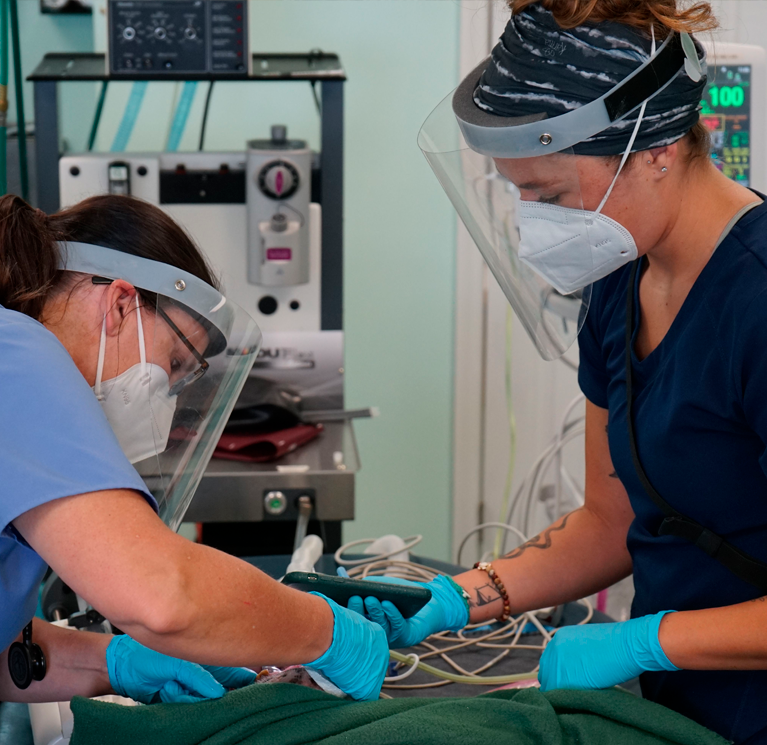
Our chimps receive top notch medical care
This includes preventative health screenings – echocardiograms, ultrasounds, radiographs and bloodwork – to find and treat medical problems early in the course of a disease. It also means treating acute problems when they occur. Our veterinarians, consulting specialists, technicians, and a community of volunteer medical doctors guarantee that the chimpanzees’ health issues are addressed with the latest diagnostics and best medicine available.
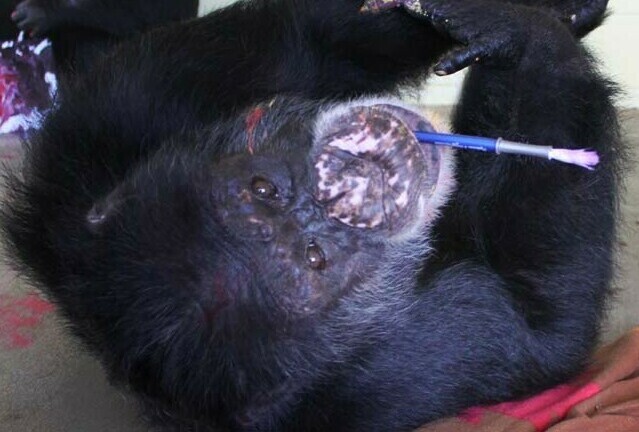
Chimps with Special Needs
Just like humans, chimpanzees sometimes have special needs. At Save the Chimps, any chimpanzee who is temporarily or permanently unable to live in one of our 12 large chimpanzee families is considered to have special needs. Some chimpanzees with special needs have a difficult time getting along with other chimps; others have medical conditions that could be exacerbated by living with a large group of chimpanzees. Some of these chimps live in the Special Needs facility, and others “time-share” an island with a larger social group.
Legacy
How we honor the passing of our beloved residents
Since its inception, Save the Chimps has provided lifelong care to more than 300 chimpanzees from research laboratories, entertainment, and the pet trade. Our purpose is to provide these amazing beings with the peaceful and dignified lives they deserve.
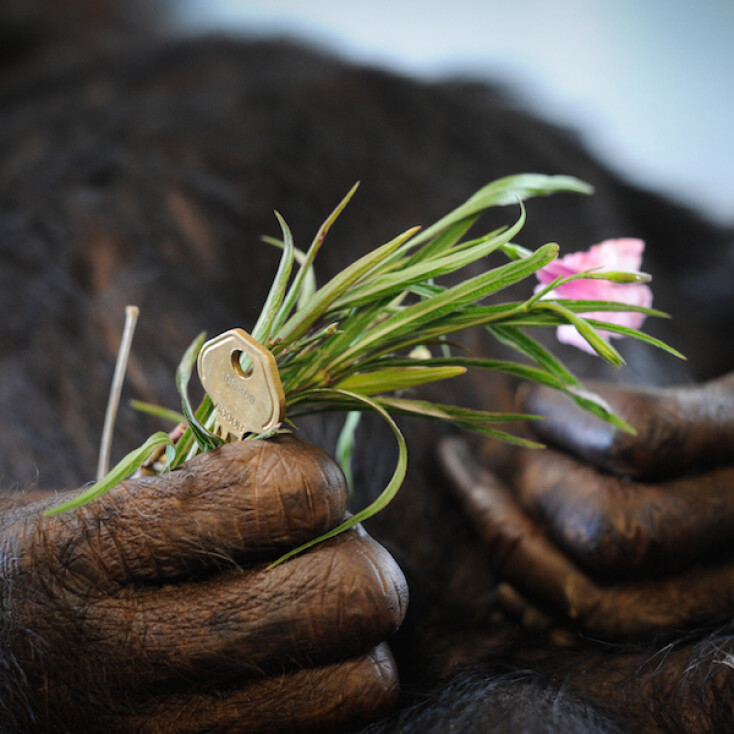
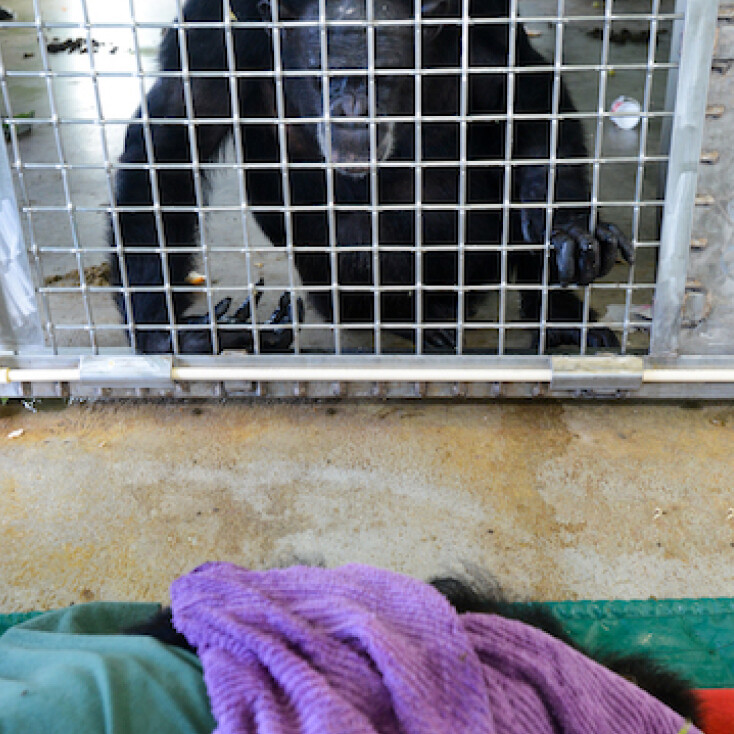
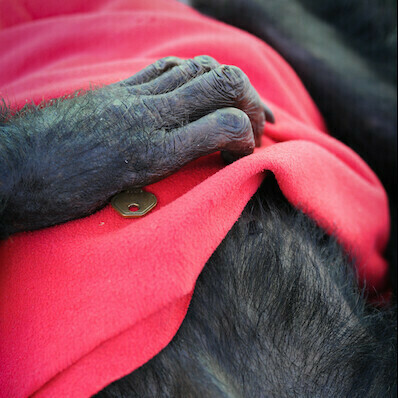
Sadly, over the years, we have had to say goodbye to some of our beloved friends. We are occasionally asked, “What happens when a chimp dies?” People wonder what we do, and how the chimps react. Over the years, we have developed a ritual to honor and say goodbye to a chimpanzee who has passed away. The chimpanzees themselves are very much a part of that ritual.